
Materials
Why Linen Isn’t Automatically Sustainable
What actually determines the impact of one of fashion’s most celebrated fibers.
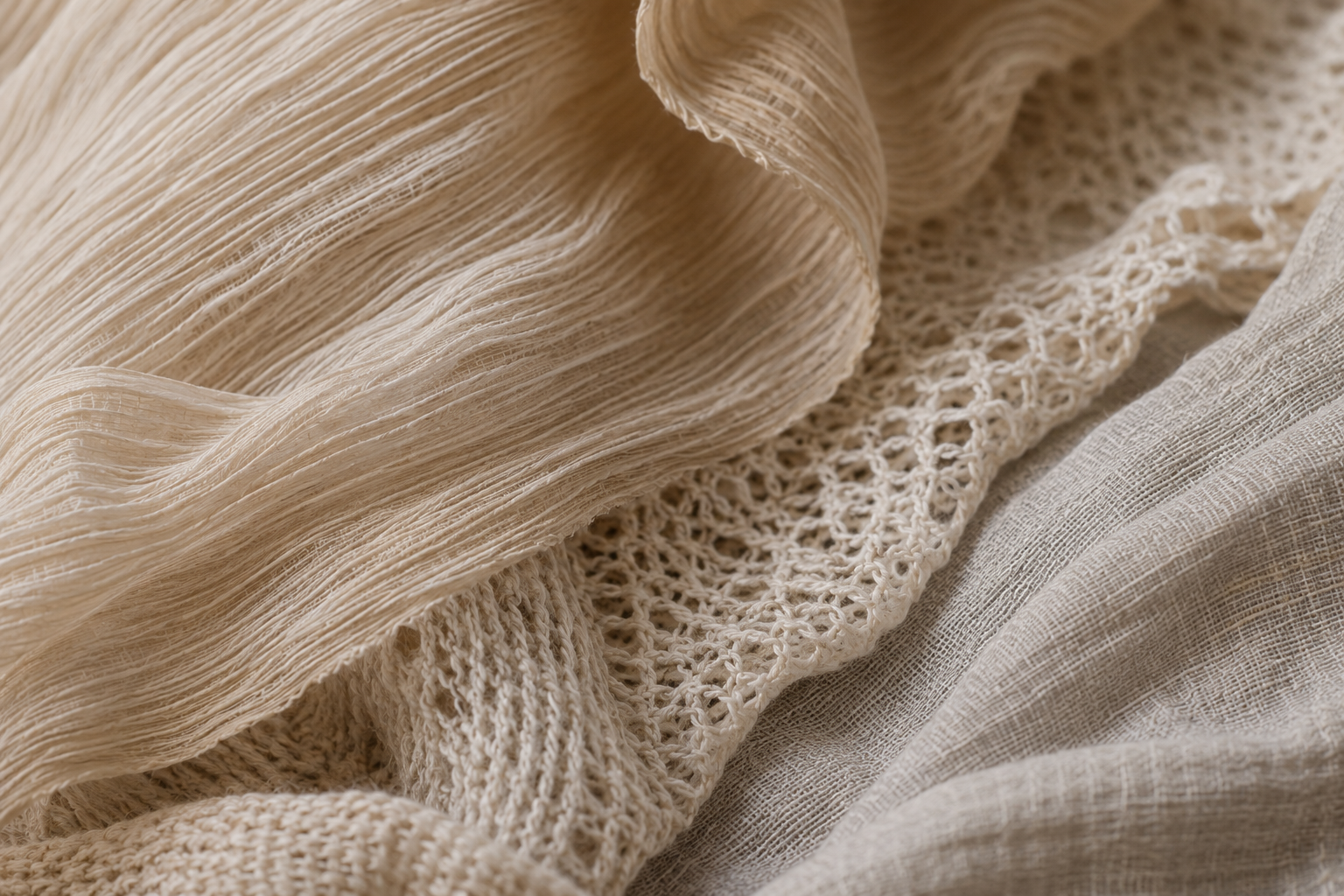
Linen is often described as a sustainable choice—and for good reason. It comes from the flax plant, which can require relatively little water and thrive in poor soils. But the fiber is only the beginning of its story.
From cultivation to processing, dyeing, finishing, and transport, every stage shapes linen’s environmental and social footprint. Understanding the full picture helps us make more thoughtful choices—and appreciate the complexity behind a material we love.
“The fiber is only the beginning.”
A closer look at the bigger picture
Flax can be a lower-impact crop, especially when grown in regions with natural rainfall and minimal chemical inputs. Intensive farming or processing, however, can change that calculation.
Linen’s sustainability is not a guarantee. It is the result of many decisions across the supply chain, supported by transparency, traceability, and care.
- Where and how the flax is grown
- Water use and farming practices
- Processing and finishing methods
- Dyeing, chemicals, and wastewater
- Labor conditions and traceability